
The Complete Guide to Knee Replacement Surgery: Everything You Need to Know
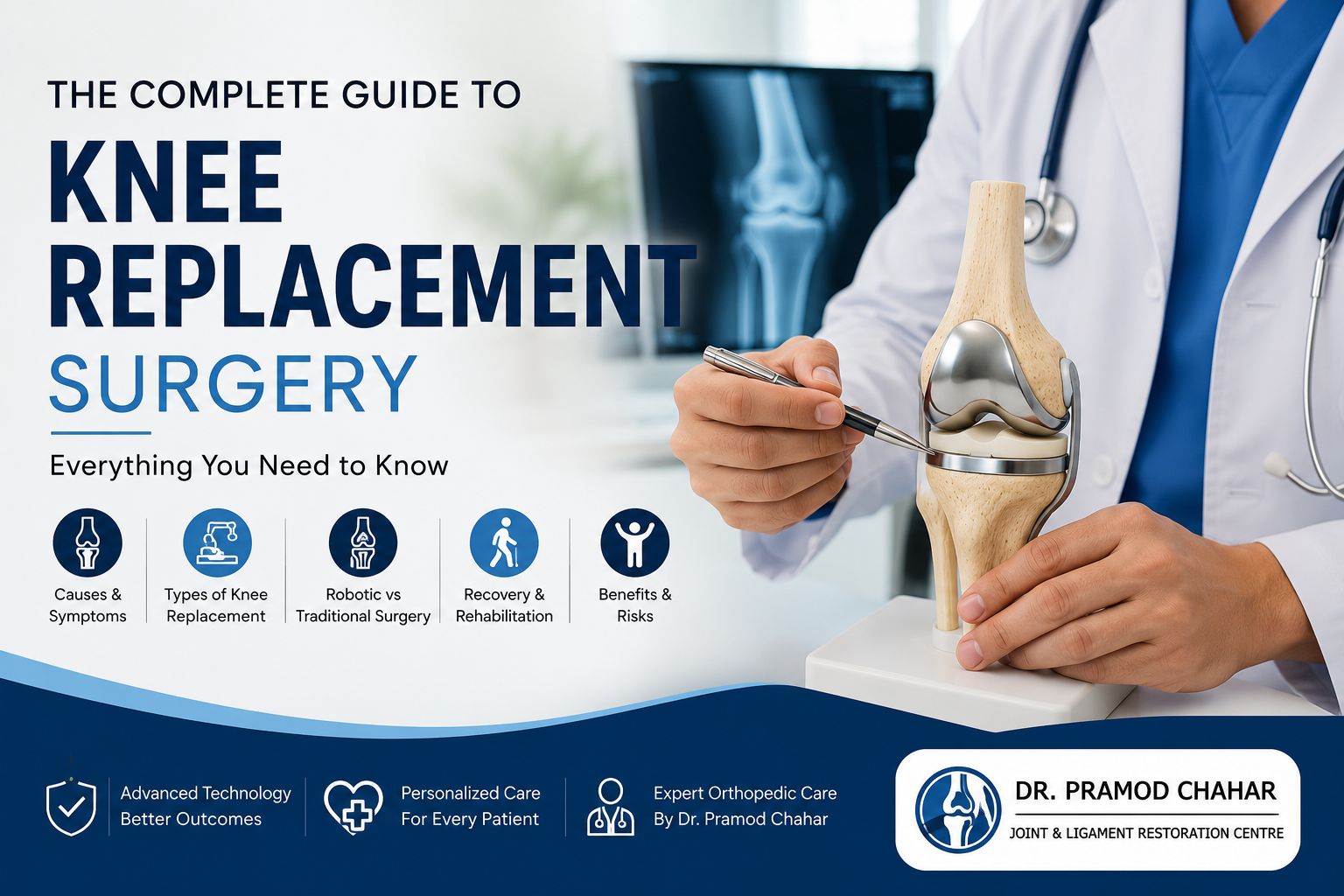
Knee pain caused by arthritis or joint damage can significantly affect your quality of life. Learn everything about knee replacement surgery, including symptoms, diagnosis, treatment options, robotic knee replacement, recovery, and when to consult an orthopedic specialist.
Introduction
Knee pain is one of the leading causes of reduced mobility among adults and older individuals. Whether it develops gradually because of arthritis or follows an injury, persistent knee pain can significantly affect your ability to walk, climb stairs, exercise, or even perform simple daily activities comfortably.
While many knee conditions respond well to medications, physiotherapy, weight management, lifestyle modifications, and minimally invasive treatments, some patients eventually reach a stage where these options no longer provide lasting relief. When severe pain and stiffness begin to interfere with everyday life, knee replacement surgery may become an effective treatment option.
Modern knee replacement surgery has evolved tremendously over the past two decades. Advances in implant design, surgical techniques, anesthesia, pain management, and robotic-assisted technology have made the procedure safer and more precise than ever before. Today, many patients experience significant pain relief, improved mobility, and a better quality of life following successful knee replacement surgery.
This comprehensive guide explains everything you need to know about knee replacement surgery—from understanding how the knee joint works to recognizing symptoms, understanding the causes of joint damage, and learning when surgery may be recommended. Whether you are exploring treatment options for yourself or a loved one, this guide aims to help you make informed healthcare decisions.
Understanding the Knee Joint
The knee is one of the largest and most important joints in the human body. It acts like a hinge, allowing the leg to bend and straighten while supporting nearly your entire body weight during walking, running, standing, climbing stairs, and many other daily activities.
Because the knee bears considerable stress throughout life, it is also one of the joints most commonly affected by age-related wear and tear, arthritis, and sports injuries.
The Bones of the Knee
Three bones come together to form the knee joint:
- Femur – the thigh bone.
- Tibia – the shin bone.
- Patella – the kneecap.
These bones work together to create a stable yet flexible joint capable of supporting body weight while allowing smooth movement.
Articular Cartilage
The ends of the femur, tibia, and the back of the kneecap are covered with a smooth protective tissue called articular cartilage. This cartilage reduces friction between the bones and absorbs shock during movement.
When cartilage wears away because of arthritis or injury, the bones begin rubbing directly against one another, causing pain, stiffness, swelling, and difficulty moving the knee.
Meniscus
Each knee contains two menisci—crescent-shaped pieces of cartilage that function as shock absorbers. They distribute body weight evenly across the joint and help protect the articular cartilage from excessive stress.
Ligaments
Strong ligaments provide stability to the knee by connecting the bones. The four major ligaments include the ACL, PCL, MCL, and LCL. Injuries to these structures can lead to instability and may contribute to long-term joint damage if left untreated.
Muscles and Tendons
The quadriceps, hamstrings, calf muscles, and surrounding tendons work together to control knee movement and provide strength during everyday activities. Maintaining healthy muscles is an important part of preserving knee function and supporting recovery after surgery.
What Is Knee Replacement Surgery?
Knee replacement surgery, also known as knee arthroplasty, is a surgical procedure performed to relieve chronic knee pain and restore function in a severely damaged knee joint. Rather than replacing the entire knee, the surgeon carefully removes the damaged cartilage and small portions of bone from the affected joint surfaces and replaces them with specially designed artificial components called implants.
These implants are typically made from medical-grade metal alloys, high-quality polyethylene (a durable plastic), or ceramic materials. They are engineered to recreate the smooth movement of a healthy knee while reducing pain caused by bone-on-bone friction.
The primary goals of knee replacement surgery are to:
- Relieve chronic knee pain.
- Improve mobility and flexibility.
- Restore joint function.
- Correct deformities caused by advanced arthritis.
- Enhance overall quality of life.
Knee replacement is generally considered only after non-surgical treatments have not provided adequate relief and knee pain continues to interfere with everyday life.
Why Is Knee Replacement Surgery Performed?
Knee replacement surgery is recommended when the knee joint has become severely damaged and conservative treatments are no longer providing adequate relief. The primary objective of the procedure is not simply to replace the joint but to relieve pain, restore mobility, improve joint function, and help patients return to their daily activities with greater comfort and confidence.
Orthopedic surgeons always prefer to begin with non-surgical treatment whenever appropriate. These treatments may include medications, physiotherapy, weight management, activity modification, knee braces, and injections. However, if knee pain continues to worsen despite these measures and significantly affects quality of life, surgery may become the most suitable option.
Every patient is unique. The decision to undergo knee replacement depends on several factors, including the severity of joint damage, pain level, overall health, age, activity goals, and how much the condition interferes with everyday life.

Who May Need Knee Replacement Surgery?
Knee replacement surgery is generally considered for individuals whose symptoms significantly affect their quality of life and who have not achieved sufficient improvement with non-surgical treatments. While many patients are older adults with arthritis, age alone does not determine whether someone is a suitable candidate. The overall condition of the knee and the patient's health are far more important.
You may be a candidate if you experience:
- Persistent knee pain lasting several months.
- Difficulty walking even short distances.
- Pain while resting or sleeping.
- Stiffness that limits knee movement.
- Difficulty climbing or descending stairs.
- Frequent swelling that does not improve with treatment.
- Knee deformity such as bow legs or knock knees.
- Reduced ability to work, exercise, or perform daily activities.
- Minimal improvement despite medications, physiotherapy, or injections.
Your orthopedic surgeon will carefully evaluate your symptoms, physical examination findings, medical history, and imaging studies before recommending surgery. The goal is always to ensure that knee replacement is the most appropriate treatment for your specific condition.
Common Causes of Knee Joint Damage
Several medical conditions and injuries can gradually damage the knee joint over time. Understanding these causes helps explain why some people eventually require knee replacement surgery.
1. Osteoarthritis
Osteoarthritis is the most common reason for knee replacement surgery. It is a degenerative joint condition in which the protective cartilage gradually wears away. As cartilage becomes thinner, the bones begin rubbing directly against one another, causing pain, stiffness, swelling, and reduced mobility.
Risk factors for osteoarthritis include increasing age, obesity, previous knee injuries, repetitive stress on the joint, family history, and certain occupations that place heavy demands on the knees.
2. Rheumatoid Arthritis
Rheumatoid arthritis is an autoimmune disease in which the body's immune system mistakenly attacks the lining of the joints. Chronic inflammation can progressively damage cartilage, bone, and surrounding soft tissues, eventually leading to severe joint destruction if not adequately managed.
3. Post-Traumatic Arthritis
A previous knee fracture, ligament injury, or meniscus tear can alter the normal mechanics of the knee joint. Even after the initial injury heals, abnormal wear may gradually lead to arthritis years later.
4. Severe Knee Injuries
Complex fractures, extensive cartilage damage, repeated ligament injuries, or untreated joint instability may increase the likelihood of requiring knee replacement later in life.
5. Other Less Common Causes
- Avascular necrosis
- Certain inflammatory joint diseases
- Congenital deformities
- Previous joint infections
Signs and Symptoms
Knee pain often develops gradually, although it may also occur after an injury. As arthritis progresses, symptoms usually become more frequent and may begin to interfere with everyday activities.
Common symptoms include:
- Persistent knee pain during walking or standing.
- Pain that continues even while resting.
- Morning stiffness lasting several minutes.
- Swelling around the knee joint.
- Reduced ability to bend or straighten the knee.
- Grinding, clicking, or cracking sensations during movement.
- Difficulty climbing stairs.
- Reduced walking distance.
- Knee instability or a feeling that the knee may give way.
- Visible changes in knee alignment.
If these symptoms persist despite appropriate treatment or begin affecting your independence and daily routine, it is advisable to consult an orthopedic specialist for a comprehensive evaluation.
How Is Knee Arthritis Diagnosed?
An accurate diagnosis is essential before deciding on the most appropriate treatment. Your orthopedic surgeon will combine information from your medical history, physical examination, and imaging studies to understand the extent of joint damage.
Medical History
Your doctor will discuss your symptoms, previous injuries, medical conditions, current medications, activity level, and treatments you have already tried. Understanding how your symptoms affect daily life is an important part of the evaluation.
Physical Examination
During the examination, the orthopedic specialist may assess:
- Walking pattern (gait).
- Range of motion.
- Joint alignment.
- Swelling and tenderness.
- Muscle strength.
- Ligament stability.
Imaging Studies
Imaging tests help confirm the diagnosis and determine the severity of arthritis or other joint problems.
- X-rays: Used to evaluate joint space narrowing, bone spurs, deformity, and the overall severity of arthritis.
- MRI: May be recommended in selected cases to evaluate cartilage, ligaments, tendons, menisci, and other soft tissues.
- CT Scan: Sometimes used for detailed assessment and preoperative planning, particularly in robotic-assisted knee replacement.
Based on these findings, your orthopedic surgeon will discuss whether non-surgical treatment remains appropriate or whether knee replacement surgery is likely to provide meaningful improvement.
Types of Knee Replacement Surgery
Knee replacement surgery is not a one-size-fits-all procedure. Depending on the extent of joint damage, your age, activity level, and overall health, your orthopedic surgeon may recommend different types of knee replacement. The goal is always to preserve as much healthy bone and tissue as possible while restoring pain-free movement.
Total Knee Replacement (TKR)
Total Knee Replacement is the most commonly performed procedure. During this surgery, the damaged cartilage and a small amount of bone from the femur, tibia, and, if required, the back surface of the kneecap are replaced with specially designed implants.
This procedure is usually recommended when arthritis has affected multiple compartments of the knee and significantly limits daily activities.
Partial Knee Replacement (PKR)
In some patients, arthritis affects only one part of the knee joint. In such cases, a partial knee replacement may be considered. Instead of replacing the entire joint, only the damaged compartment is resurfaced while preserving the healthy bone, cartilage, and ligaments.
Partial knee replacement may offer a smaller incision, faster recovery, and a more natural-feeling knee for carefully selected patients.
Revision Knee Replacement
Although modern knee implants are designed to last many years, some patients may eventually require a revision procedure due to implant wear, loosening, infection, or other complications. Revision surgery replaces the existing implant with a new one and is generally more complex than a primary knee replacement.
Robotic vs Traditional Knee Replacement
Robotic-assisted knee replacement is one of the most significant advancements in modern orthopedic surgery. It combines the experience of the orthopedic surgeon with advanced computer-assisted technology to improve surgical planning and implant positioning.
Before surgery, detailed imaging is used to create a three-dimensional model of the patient's knee. This allows the surgeon to customize the surgical plan according to the individual's anatomy.
During the procedure, the robotic system provides real-time guidance, while the surgeon remains in complete control of every step. The technology does not perform the surgery independently; instead, it assists the surgeon in executing the planned procedure with greater precision.
Potential Benefits of Robotic-Assisted Knee Replacement
- More accurate implant positioning.
- Personalized surgical planning.
- Improved joint alignment.
- Better preservation of healthy bone.
- Potentially smoother recovery for selected patients.
Recovery After Knee Replacement Surgery
Recovery is a gradual process that varies from person to person. Most patients are encouraged to begin moving the knee and walking with assistance shortly after surgery, depending on their individual condition and their surgeon's recommendations.
Typical Recovery Timeline
- First Few Days: Pain management, gentle exercises, and assisted walking.
- Weeks 2–6: Improved mobility with continued physiotherapy and increasing independence in daily activities.
- Weeks 6–12: Many patients return to low-impact activities and continue strengthening exercises.
- 3–12 Months: Ongoing healing, improved strength, and gradual return to an active lifestyle, depending on individual progress.
Physiotherapy is an essential part of recovery. Following the prescribed rehabilitation program can help improve flexibility, strengthen the surrounding muscles, and maximize the long-term success of the surgery.
Conclusion
Knee replacement surgery has transformed the lives of countless individuals living with severe arthritis and chronic knee pain. When non-surgical treatments are no longer effective, this procedure can provide significant pain relief, improve mobility, and help patients regain independence.
Every patient is different, and the decision to undergo knee replacement should be based on a thorough evaluation by an experienced orthopedic surgeon. Understanding your condition, exploring all available treatment options, and having realistic expectations about recovery are important steps toward achieving the best possible outcome.
If persistent knee pain is affecting your quality of life, consulting an orthopedic specialist can help you determine the most appropriate treatment plan for your individual needs.
Consult Dr. Pramod Chahar
Persistent knee pain should never be ignored. Early diagnosis and timely treatment can help improve joint function and quality of life. Whether you are considering non-surgical treatment, robotic-assisted knee replacement, or a second opinion, consulting an experienced orthopedic specialist is an important first step.
Dr. Pramod Chahar specializes in advanced joint replacement surgery, sports injury management, and comprehensive orthopedic care. Schedule a consultation to receive a personalized evaluation and discuss the treatment options that best suit your condition and lifestyle.
Frequently Asked Questions
Consult Jaipur's Knee & Joint Specialist
Schedule an appointment with Dr. Pramod Chahar opposite Gate 1 of SMS Hospital, Jaipur for expert surgical advice.
Patient Advisory Notice:
This article is reviewed by Dr. Pramod Chahar and is intended to inform the community about joint safety, rehabilitation timelines, and options. It does not replace an in-person surgical evaluation. Please contact the care desk directly to verify treatment suitability for your specific orthopedic diagnosis.